Coal Mine Connecting Pin and Link Horizontal Tension Machine
This equipment is a horizontal tensile testing machine developed by our company for testing the tensile strength of connecting pins and chains of narrow-gauge vehicles in coal mines. It complies with the industry standard "AQ1112-2014 Specification for Monitoring Connecting Chains of In-Service Narrow-Gauge Vehicles in Coal Mines" and the industry standard "AQ1113-2014 Specification for Monitoring Connecting Pins of In-Service Narrow-Gauge Vehicles in Coal Mines."
This equipment is a horizontal tensile testing machine developed by our company for the inspection and stretching of connecting pins and chains of narrow-gauge vehicles in coal mines. It complies with the industry standard "AQ1112-2014" for the monitoring specification of connecting chains in narrow-gauge vehicles used in coal mines and the industry standard "AQ1113-2014" for the monitoring specification of connecting pins in narrow-gauge vehicles used in coal mines.
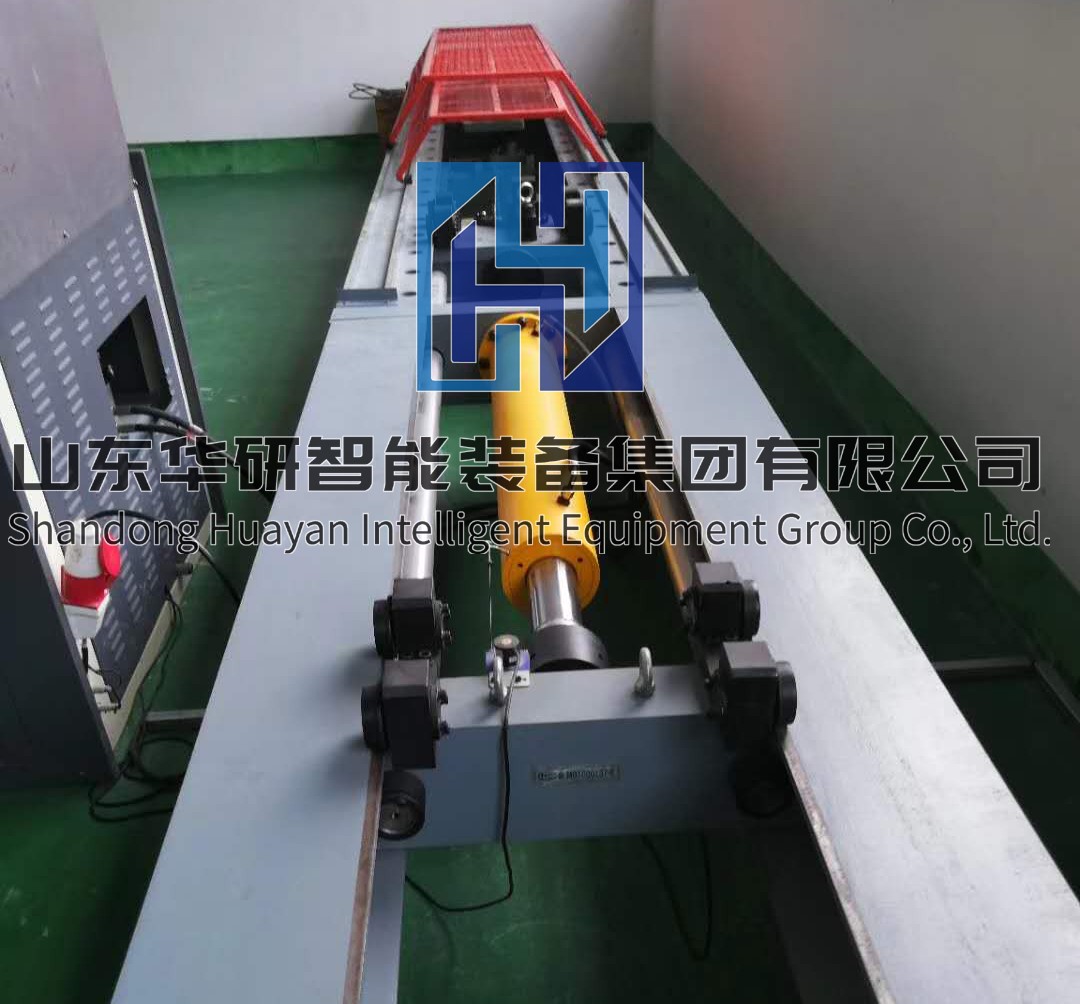
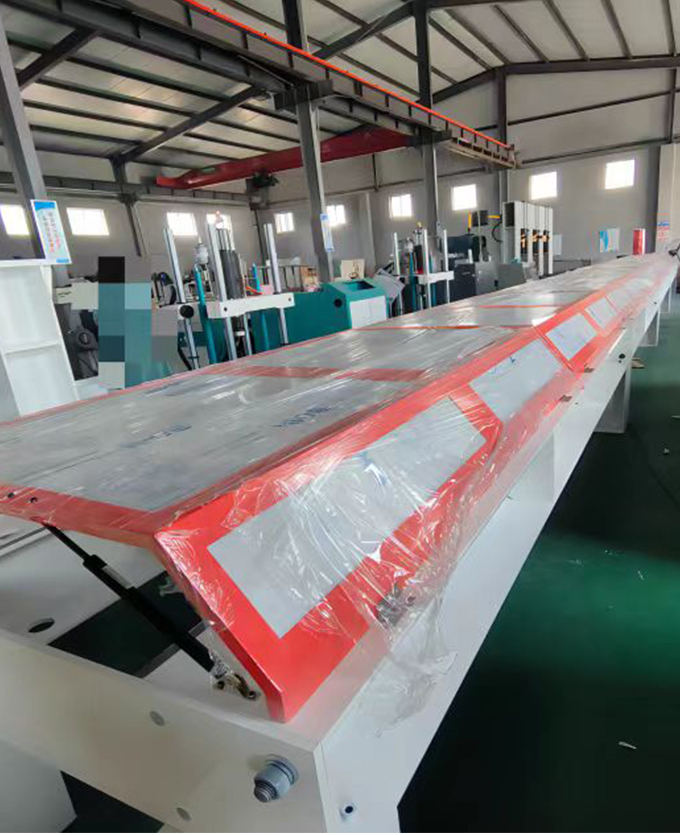
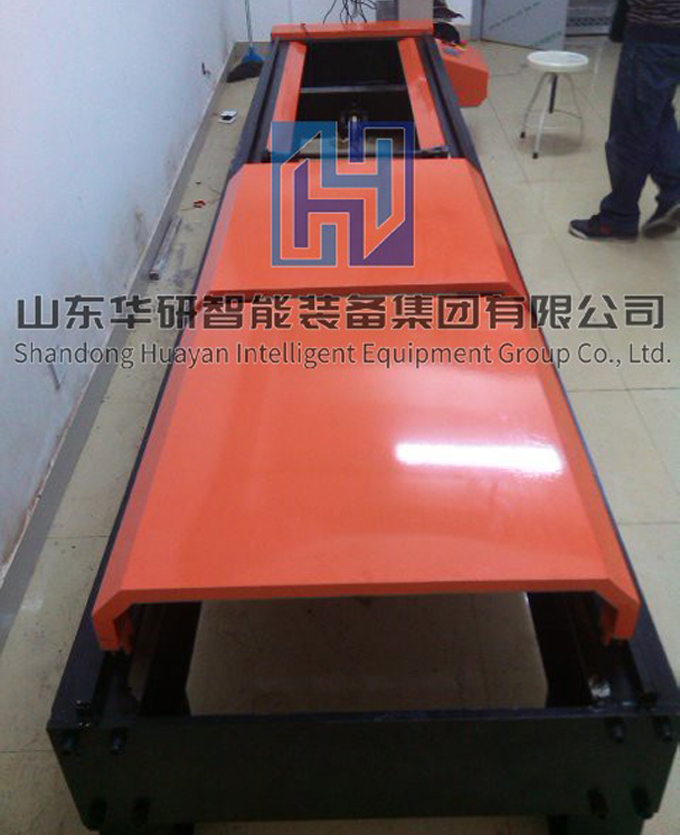
The mine car pin-chain horizontal tensile testing machine mainly consists of the main unit (frame structure), mine car entry mechanism, pin-chain stretching fixtures, loading cylinder, servo oil source, servo controller, related testing software, and other necessary accessories.
The testing machine adopts a four-column horizontal frame structure, an automatic mine car entry and exit mechanism, a single-rod double-acting piston cylinder to apply test force, automatic control of the testing process, a load sensor for force measurement, and a microcomputer to display the test force and test curve.
The main unit part primarily consists of components such as the rear beam, double columns, cylinder seat, cylinder piston, pin-chain fixtures, and load sensor. The cylinder seat, double columns, and rear beam form a force-bearing frame, and the single-rod double-acting low-friction piston cylinder generates a test force of 2000 kN under high-pressure oil.
For chain tensile testing, front and rear fixtures are used, and stretching is performed with the withdrawal mechanism.
For pin tensile testing, a pin stretching fixture is connected to the rear fixture, and together with the front fixture, it performs the tensile test on the pin.
This part is the execution component for conducting the test. Both ends of the specimen are placed in the fixtures on the fixed beam and the moving beam, respectively. The thrust cylinder then drives the moving beam to apply the test force to the specimen. The loading speed is automatically controlled until the test concludes.
1. Test force: 2000 kN;
2. Force measurement range: 2% to FS (full scale, no range division, equivalent to 3 ranges);
3. Test force accuracy: ±1%;
4. Tensile space (including piston stroke): 2800 mm;
5. Piston stroke: 600 mm; no-load moving speed not less than 300 mm/min.
6. Effective working space of the testing machine (width × length): approximately 600 mm × 2800 mm;
7. Force measurement method: load sensor force measurement;