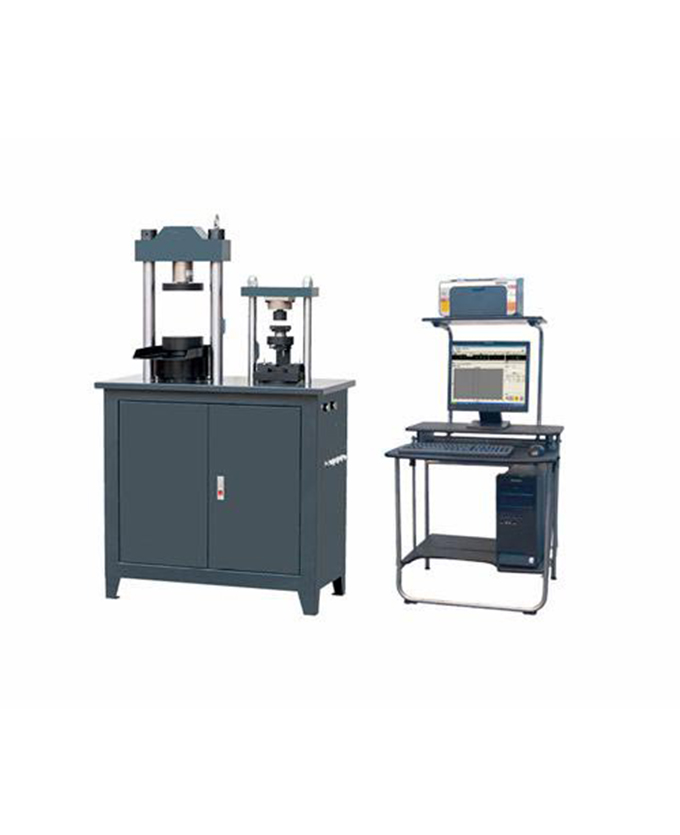
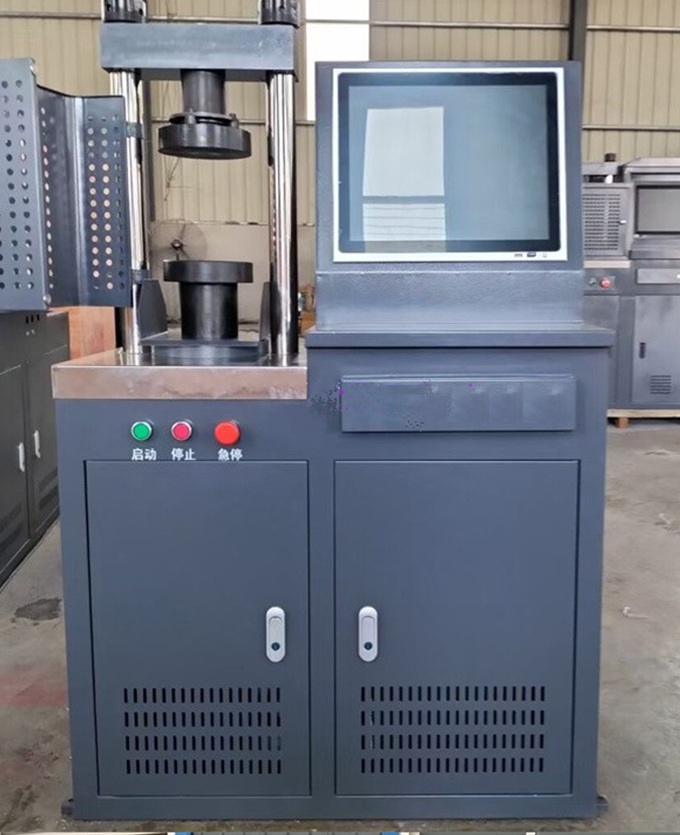
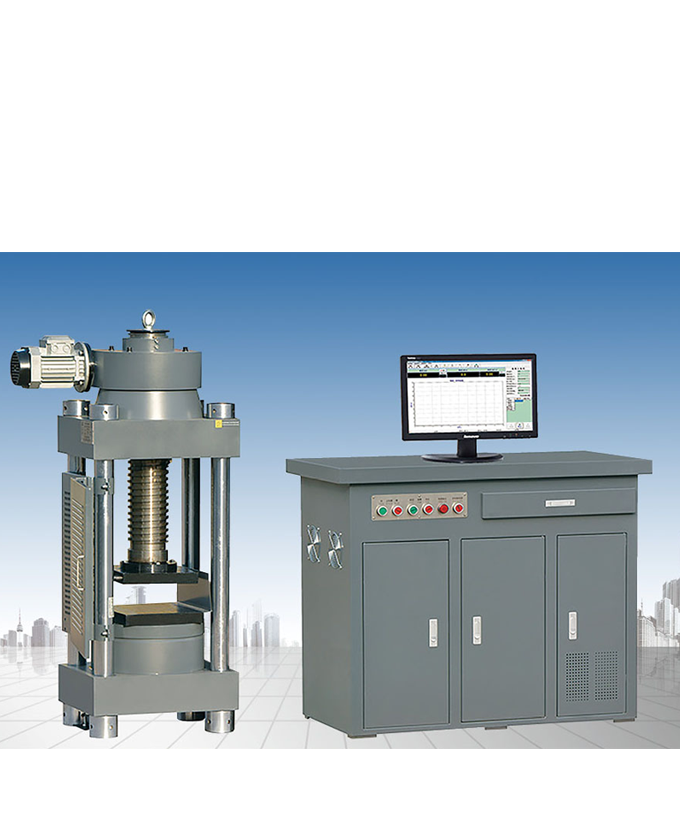
This machine is primarily used for compressive strength tests of materials such as cement mortar, carbon materials, and petroleum proppants, and can also be employed for mechanical performance tests of other materials. It complies with the requirements of standards GB/T2611, GB/T17671, GB/T16826, and GB/T50081.
I. Product Usage
This machine is primarily used for compressive strength testing of materials such as cement mortar, carbon materials, and petroleum proppants. It can also be employed for mechanical performance testing of other materials, complying with the standards GB/T2611, GB/T17671, GB/T16826, and GB/T50081.
II. Product Description
The testing machine utilizes a high-performance AC servo motor to drive a precision ball screw. Its high-performance control system enables automatic and programmable control in various modes, including constant stress rate, constant displacement rate, and constant deformation rate.
The main unit of the testing machine adopts a lower-mounted design, allowing for quick sample clamping. The entire machine is constructed with full steel, ensuring high strength and excellent fatigue resistance.
As it is powered by an AC servo motor, there is no overheating issue, making it suitable for 7×24-hour operation. Safety protection devices are included.
III. Applicable Standards
GB/T 17671-1999 "Method of testing cements—Determination of strength";
JB/T 7406.1-1994 "Terminology for testing machines—Material testing machines";
GB/T 16825.1-2008 "Verification of static uniaxial testing machines—Part 1: Tension/compression testing machines—Verification and calibration of the force-measuring system";
GB/T 22066-2008 "Evaluation of computer data acquisition systems for static uniaxial testing machines";
JJG 139-2014 "Tension, compression, and universal material testing machines";
JB/T 6147-2007 "Technical requirements for packaging, packaging marks, storage, and transportation of testing machines";