

Composite Material Shear Test Fixture
The standard specimen (as shown in the front view of Figure 1) is 3 inches long, 0.75 inches wide, and up to 0.50 inches thick. Typically used specimens are about 0.1 inches thick. If needed, this fixture can also accommodate shorter and narrower specimens. Each edge of the specimen is machined with a 90° notch, and a strain gage can be mounted on the notched surface to monitor shear strain. Either standard ±45° biaxial strain gages or special gages are typically used. To install the specimen, lift with your finger the small-diameter rod protruding from the fixture below the bottom notch of the specimen (visible in the front photo of Figure 1), to center the specimen from left to right. Push the specimen against the flat back surface of the fixture to position it front to back. The tapered wedges are not used for clamping; they can be adjusted with finger knobs to accommodate specimens with slightly different widths. Wedges of different thicknesses can be provided to accommodate specimens beyond this small range of thickness variation.
The moving part of the fixture includes a linear ball bushing (see the rear view photo in Figure 1), which moves along hardened steel vertical columns mounted on the bottom of the fixture. This ball bearing eliminates binding on the guide columns and minimizes frictional resistance. The fit of the bearing can be adjusted using screws and lock nuts located on the back of the moving part of the fixture.

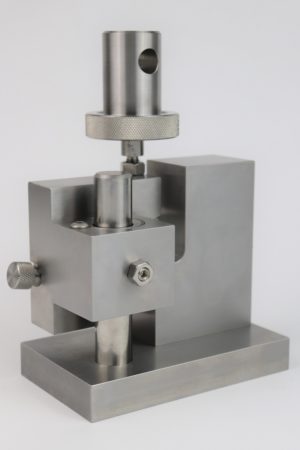
During use, the fixture is placed directly and unrestrained on the base of the testing machine. As shown in Figure 2 for the standard size fixture, the fixture has a standard 1.25-inch diameter stud with a locking ring and a 0.50-inch diameter cross pin hole, threaded into the movable half of the fixture. Any special adapters required for a particular testing machine in use are attached to this stud, secured by the locking ring provided with the fixture.
Figure 2 shows an example of a special fixture. The small fixture on the left is essentially a quarter-scale model of the standard fixture, designed for testing specimens 20 mm long, 5 mm wide, and 5 mm thick. The standard-sized fixture is on the right for comparison. We also produce special fixtures larger than standard size for customers.
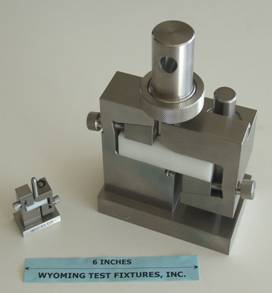
Fig. 2: Quarter-scale shear fixture (left) and standard fixture (right).
Figure 3 shows a special fixture designed for high-temperature testing. This fixture is made of nickel-based superalloy, which can be used at temperatures up to 1500ºF (815ºC). Since no spherical bushings are available for such high temperatures, the right half of the fixture moves on a large-diameter, close-fitting alignment rod. Additionally, as this fixture is typically used inside a high-temperature furnace, it has a threaded hole at the bottom for attachment to a support rod, and a threaded bolt at the top for connection.
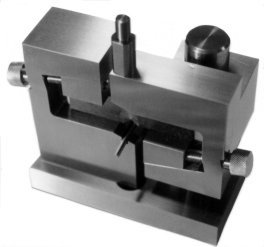
Fig. 3: Nickel superalloy shear test fixture used at 1500°F (815°C)
